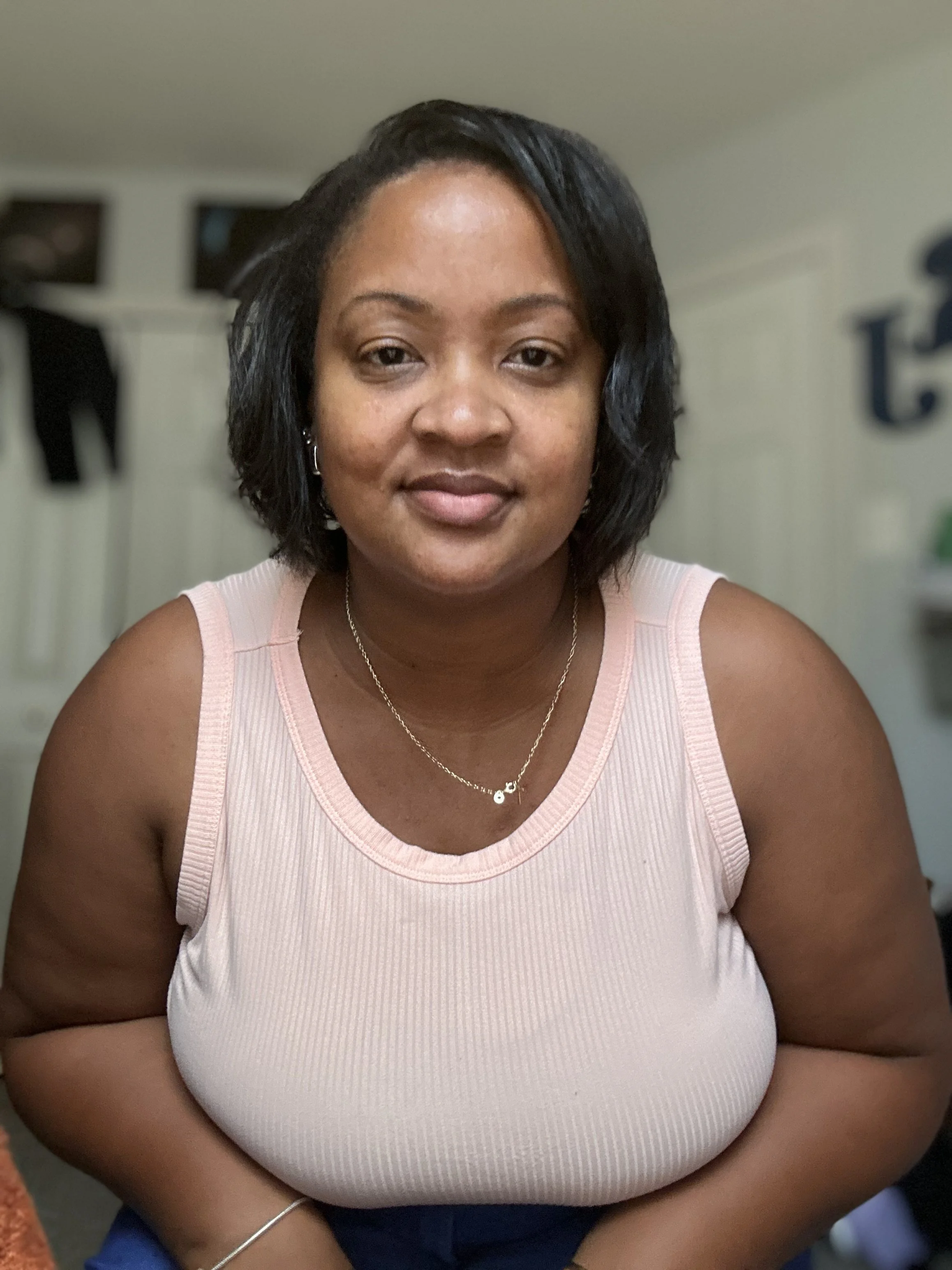
So I Got Diagnosed With ADHD… Here’s the Update
A little while ago, I shared that I was officially diagnosed with ADHD at…39. It’s what the Internet is calling a “late diagnosis”.
And when I say officially diagnosed, I mean the results were basically: Ma’am. You have ADHD. A lot of it.
At first, there was a lot of relief.
So many things I had spent YEARS thinking were personality flaws suddenly had an explanation. The forgetfulness. The overstimulation. The 47 thoughts happening simultaneously. Starting one thing, noticing another thing, doing that thing, remembering the first thing three hours later.
You know. Normal Tuesday activities.
But getting diagnosed was really just the beginning.
Because then came the part nobody really talks about:
Figuring out what actually works for your brain (the BEST part!).
The Medication Journey Has Been… A Journey
I wish I could say I got diagnosed, started medication, and immediately became the organized, focused woman of my dreams.
LOL. NO!
First, an important little piece of background: Zoloft was already here before ADHD entered the chat.
I’ve been taking Zoloft for anxiety and depression long before I knew ADHD was part of the equation. So when I was diagnosed, we weren’t starting from scratch.
We were figuring out how to treat ADHD while also paying attention to everything else my brain—and apparently my hormones—already had going on.
Because why have ONE thing happening when your brain can create a group project?
First, the non-stimulant.
We started my ADHD treatment with a non-stimulant.
We gave it some time. Then we increased the dosage. And it helped.
But as I started paying closer attention to my days, I realized there were still gaps. There were parts of the day when my focus, motivation and ability to actually DO THE THING were not where I needed them to be.
And this has probably been one of the biggest lessons of the medication process:
“It’s helping” and “this is the right combination for me” aren’t necessarily the same thing.
So we kept adjusting.
And then…a stimulant entered the chat.
Eventually, we added a stimulant alongside the non-stimulant. And because we were being cautious, we started with a very, VERY low dose.
Which sounded great in theory.
In reality, my brain was basically like:
That’s adorable.
It did enough for me to realize, OH. Okay. I see what this is supposed to do.
It also did enough for me to realize fairly quickly that I needed a higher dose.
So…back to my doctor I went.
We increased it and switched to a longer-acting version, which has given me more coverage during the part of the day when I actually need my brain to cooperate.
I’m still paying attention to how I feel, when the medication kicks in, when it wears off, what feels easier and where I’m still struggling.
Because medication has absolutely helped me focus.
But…
I cannot emphasize this enough—Medication does not decide what I should focus ON.
That part is apparently still my responsibility.
Rude!
Then we have the hormones.
Since the hormones needed their own seat at the table.
Apparently, my regular medication routine and my pre-menstrual brain occasionally have different plans.
I started noticing that there were certain weeks of the month when everything felt…more.
More overwhelmed. More emotional. More anxious. More easily overstimulated.
More WHY IS EVERYONE MAKING NOISE AND WHY ARE YOU TOUCHING ME?!
So my doctor and I also adjusted the medication that I was already taking for anxiety and depression.
During the weeks when I’m the most hormonal, I temporarily increase my Zoloft dosage and then return to my regular dose for the rest of the month.
And honestly, this whole process has made me realize how interconnected everything can be.
ADHD doesn’t exist in this neat little box separate from anxiety, depression, hormones, sleep, stress, motherhood, and the rest of my life.
It’s all happening inside the same person.
Hi. It’s me!
Medication Helps. It Isn’t Magic.
I think that’s one thing I really want to make clear when I talk about my diagnosis.
Medication has helped me. A lot.
But medication didn’t suddenly turn me into someone without ADHD.
I still need my systems. I still need reminders. I still get overstimulated. I still lose things.
I still procrastinate. I still occasionally spend an impressive amount of time doing something that was absolutely NOT the thing I sat down to do.
And that has been another big part of this whole experience: realizing that medication is a tool. A really helpful tool for me—but still just one piece of figuring out how my brain works.
Apparently, I Have Sensory Issues Too.
This has probably been one of the funniest parts of learning more about my ADHD.
Because apparently there were approximately 9,472 things I've spent my entire life saying, “I just HATE that,” that actually fall under sensory sensitivity.
Being touched too much? Absolutely not. Socks? Depends on the sock. Waistbands? They better behave. Turtlenecks? Why would I voluntarily allow clothing to gently strangle me all day?!
And don't even get me started on jeans and pants and bras that seem to have their own agenda.
The wild part is that I've always been this way. I just never connected any of it.
Now I'll notice myself getting irrationally annoyed by a sensation and think:
Ohhhhhhh. ADHD.
Which doesn't necessarily make the sensation less annoying. But at least now I know why I suddenly want to fight my shirt.
I Have Systems for My Systems.
If you've been here for a while, you already know I love a planner.
And a calendar. And an app. And probably another app that somehow organizes the first app.
I've realized that managing my ADHD isn't about finding one perfect system.
It's about giving my brain multiple places to catch things before they disappear into the abyss.
Right now, some of the things helping me are:
My planner that is situated into hourly scheduling slots. The Structured App. My Google Calendars (yes I have multiple, for each email address; don’t judge me!).
And am I perfectly consistent with all of them?
Absolutely not!
That's kind of the point, right?!
I'm learning to build systems that work with my brain instead of creating elaborate routines that require me to suddenly become a completely different person in order to maintain them.
Then There’s Parenting With ADHD.
This one deserves its own section because WHEW.
I love my children. Deeply. Unconditionally. Would walk through fire for them.
But if someone says “Mommy” followed by another request while someone else is touching me and the TV is on and there's something beeping in the kitchen and I'm trying to remember why I walked into the room...!!!
Motherhood is already sensory overload times 100.
Motherhood with ADHD sometimes feels like having 36 browser tabs open while two tiny coworkers stand beside you clicking “open new tab.”
All. Day. Long.
I've started recognizing when I'm overstimulated instead of immediately assuming I'm just being impatient. That's been a big shift for me.
I'm learning when I need quiet. When I need a transition between work and mom mode. When I've reached my limit for being climbed on, talked to, asked questions, needed, touched, and generally treated like the household customer-service department.
And I'm also learning that recognizing the overstimulation earlier gives me a better chance of doing something about it before I hit the point where every sound makes my eyes twitch.
Do I always catch it in time? Absolutely not!
There are still hard days.
Which brings me to…
Some Days, ADHD Still Climbs Into the Driver’s Seat.
Here’s the thing I definitely don’t want to leave out of this update:
I. Still. Struggle.
There are days when the medication is doing what it’s supposed to do, I have my planner, my calendar, my routines, ALL THE THINGS—and ADHD still says:
Cute. Move over. I’m driving today.
Those are the days when I can’t seem to get started. Or I get started on twelve things and finish approximately zero of them.
I lose something that was JUST in my hands.
I recently lost my keys and realized it as I was walking out the door to take my oldest to piano lessons. It took an hour for the WHOLE family to find them…they were at the bottom of the kitchen trash can. Needless to say, we never made it to piano lessons that night (my oldest was far from upset haha). I was upset with myself for the rest of the night. My oldest asked me if I was mad and I said, “Only at myself, buddy.” I love that he asked and that I was honest about it. Because I lose many things and my keys usually don’t make the list…all of the time!
There are times when I know exactly what I need to do but cannot convince my brain to actually do it.
And yes, I still get frustrated with myself!
I’m also learning to give myself grace and compassion.
Funny how both of those work when we use them on ourselves and not just on the people we love.
A diagnosis didn’t magically erase almost 40 years of habits, coping mechanisms, masking, and expectations I’ve placed on myself.
But now I can recognize what’s happening.
And the more I learn about my ADHD, the more determined I am to keep her in the passenger seat.
Some days, she can even sit her behind in the back.
Because I don’t want to spend my life fighting my ADHD or wishing my brain worked differently. I’m learning how to work with it.
There are things about this brain that I genuinely love. The hyper-focus when I’m locked into something I care about. The ideas that seemingly come out of nowhere. The creativity.
The ability to have approximately 7,000 thoughts and somehow connect two things that probably shouldn’t make sense together—but they DO.
The way I can get ridiculously excited about a new idea and immediately want to figure out how to make it happen.
I’m learning that ADHD can absolutely be my superpower.
But having a superpower doesn’t mean every day is easy.
Some days I’m productive, focused and amazed at how much my brain can accomplish.
Other days I’m looking for my phone while it’s in my hand.
Both versions are me.
The Biggest Change Isn't Actually the Medication.
It's understanding myself. That's probably been the biggest surprise since my diagnosis.
Medication has helped, TREMENDOUSLY. The routines help.
The planners, calendars, reminders and little ADHD-friendly tricks help.
But finally understanding why my brain does what it does has changed the way I talk to myself.
Instead of:
Why can't I just do this?
I'm starting to ask:
What would make this easier for my brain?
Instead of:
Why am I so irritated right now?
Sometimes it's:
Oh. I've been talked to, touched, and needed for three straight hours and my nervous system has officially clocked out.
I'm still learning. We're still adjusting things.
I'm still going to lose stuff. I'm still going to walk into rooms and forget why I'm there.
I'm still going to make a beautifully organized system and occasionally forget the system exists. But now I know myself better.
And after almost 40 years of trying to force my brain to operate the way I thought it was supposed to?
I'm much more interested in figuring out how my brain works.
And that has been another big part of this whole experience: realizing that medication is a tool. A really helpful tool for me—but still just one piece of figuring out how my brain works.
And if anything, that’s been the biggest shift in my expectations. I didn’t get “fixed.” I got supported. And those are two very different things.
Medication helps me access my focus more consistently, but it doesn’t replace the need for structure, awareness, or self-understanding.
It just gives me a better starting point to work from. And honestly? That alone has been life-changing.
The goal isn’t to make my ADHD disappear.
It’s learning enough about myself to know that I’m in the driver’s seat.
ADHD can certainly come along for the ride.
She just doesn’t get the keys.